From Electrification to the Grid

Eighteen years at the edge of the grid
Heron founder and CEO Drew Baglino spent 18 years at Tesla leading innovation across powertrain engineering, charging, battery cells, and grid storage. As these products scaled from lab prototypes to gigawatts deployed per year, too often legacy components, like transformers and switchgear, held up progress.
Supply shortages forced his teams to place orders for standard electrical equipment years in advance. A new version of Megapack or custom manufacturing equipment for a new factory could be designed, validated, and delivered more quickly than an order of run-of-the-mill medium voltage switchgear for a factory build-out.
The other side of the wire
Ultimately, rapid innovation in compute, renewables, energy storage, and end-use electrification has run headlong into legacy bottlenecks on the other side of the wire. The past decades of sluggish electricity demand lulled grid supply chains into complacency and slowed innovation.
America's energy problem isn't supply. It's delivery.
Meanwhile, 20 years of learning by doing has unlocked economies of scale in solar, wind, and batteries while fracking unleashed abundant natural gas. Adjusted for inflation, the cost to generate electricity has fallen while moving electrons has become more costly and now dominates bills.

Medium voltage is the next frontier
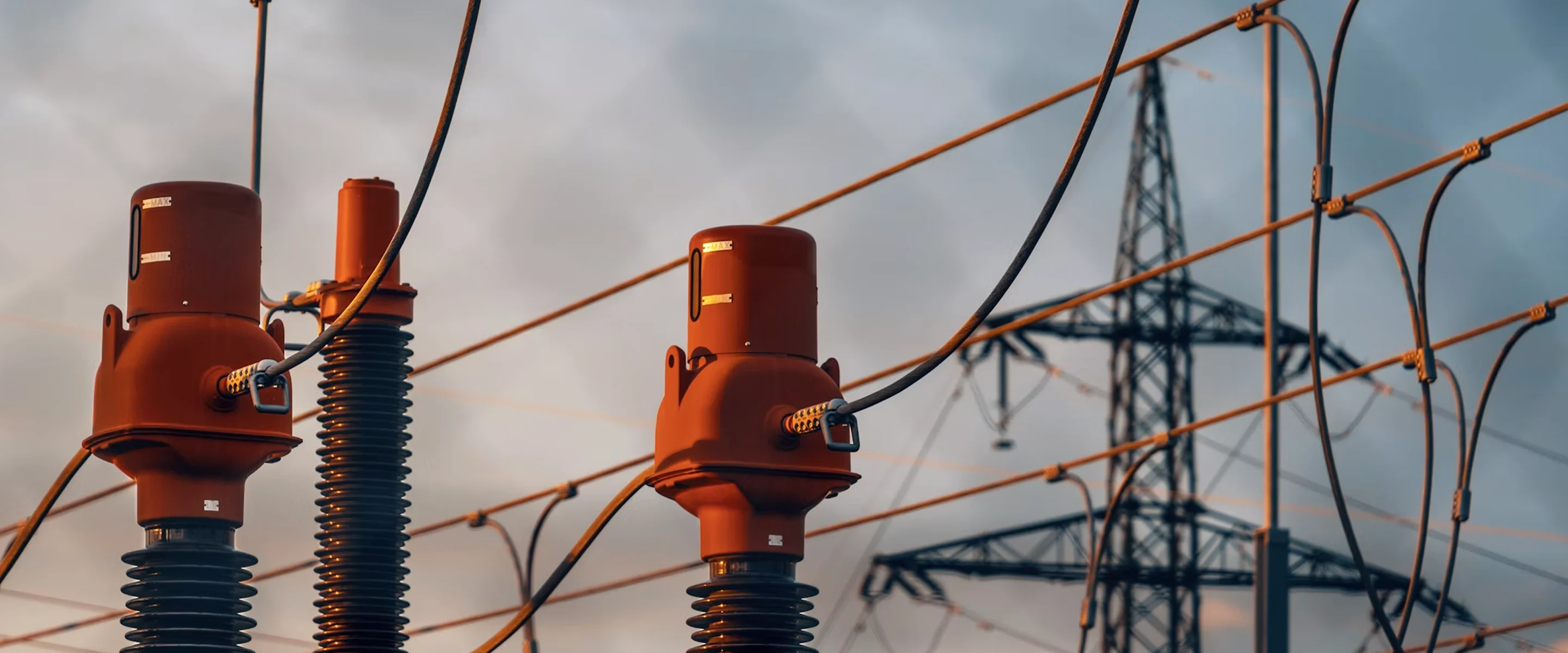
Much of the transmission and distribution equipment on the grid was deployed decades ago, and today’s hardware additions are fundamentally unchanged legacy designs. Electrical substations are built around mechanical, passive transformers and switchgear that offer little control and can’t respond tothe changing demands of a 21st-century grid.
Power electronics meet 21st-century demands
Advances in power semiconductors since the 1970s have transformed the way power is converted and controlled at low voltages, unleashing incredible advances in telecommunications, computing, and consumer electronics. After decades of materials and device development, today’s silicon carbide devices can handle thousands of volts and switch in microseconds.
They’re made by the terawatt every year for electric vehicles and renewable energy converters.
It is time to leverage these advances to unlock a more efficient, reliable, and affordable electric grid. Heron exists to do exactly that, at the critical inflection in electricity demand as electric vehicles, heat pumps, reshored manufacturing, and data centers scale.
A team that can ship hardware in volume
Our team combines expertise in power electronics, software, and high-volume manufacturing. We bring hard-won experience engineering, building, and deploying electric vehicles, energy storage, and other physical products at world-changing scale. We are aware of the challenges ahead and motivated to overcome them.