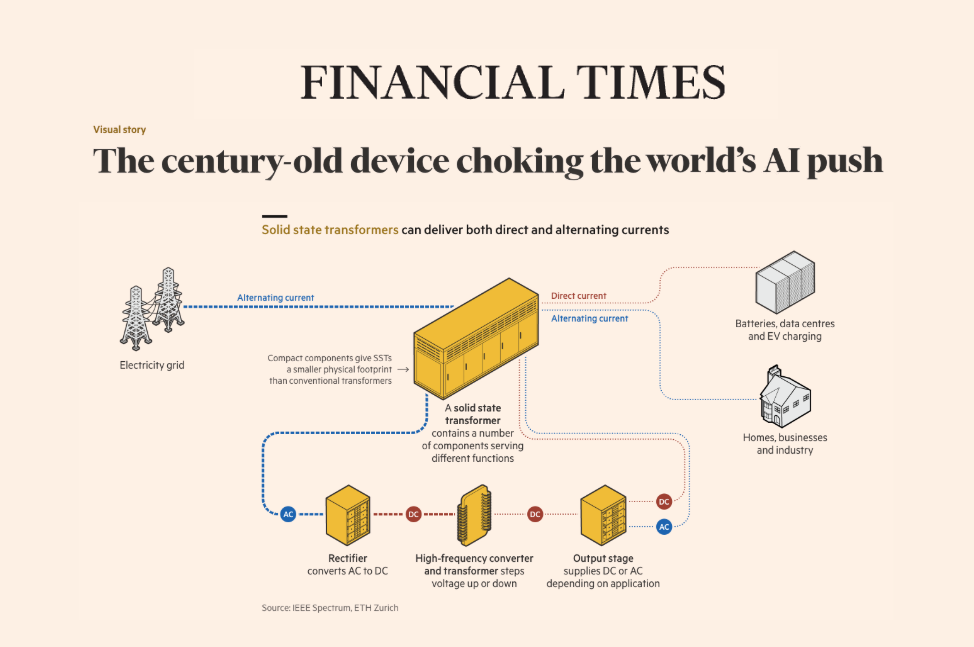
Financial Times: The century-old device choking the world’s AI push
It was during his 18 years at Tesla that Drew Baglino realised how inadequate the US energy grid had become. The technology connecting to the network was advancing rapidly, but the infrastructure underpinning it had changed little for decades.
The economy of the 21st century is still drawing on a power system built in the 19th century, he says. “It just isn’t able to keep up.”
The backbone of the electricity grid is the transformer — a crucial, largely unseen device that increases voltage so electricity can travel across the grid efficiently, then reduces it before it reaches homes and businesses.
Although transformers have become larger, more efficient and more specialised over the past 150 years, the devices still rely on complex, labour-intensive manufacturing processes that are difficult to automate and scale.
Demand for transformers and other power equipment is surging as AI data centres compete with renewable energy projects, transport electrification and industrial expansion for scarce supplies.
Average lead times for transformer orders, once measured in months, now stretch into years. Prices for certain large devices have almost doubled post-pandemic. Analysts expect the supply crunch to last until at least 2030.
As AI data centres drive up demand for large power transformers, shortages are becoming a major brake on growth.
Almost 40 per cent of US data-centre projects due to come online this year are at risk of falling behind schedule, according to data shared with the FT by SynMax, a satellite and AI analytics group. More than a dozen industry executives said power and related equipment were among the primary reasons for hold-ups, alongside labour shortages and permitting hurdles.
Read more: https://ig.ft.com/transformers/
Related Articles
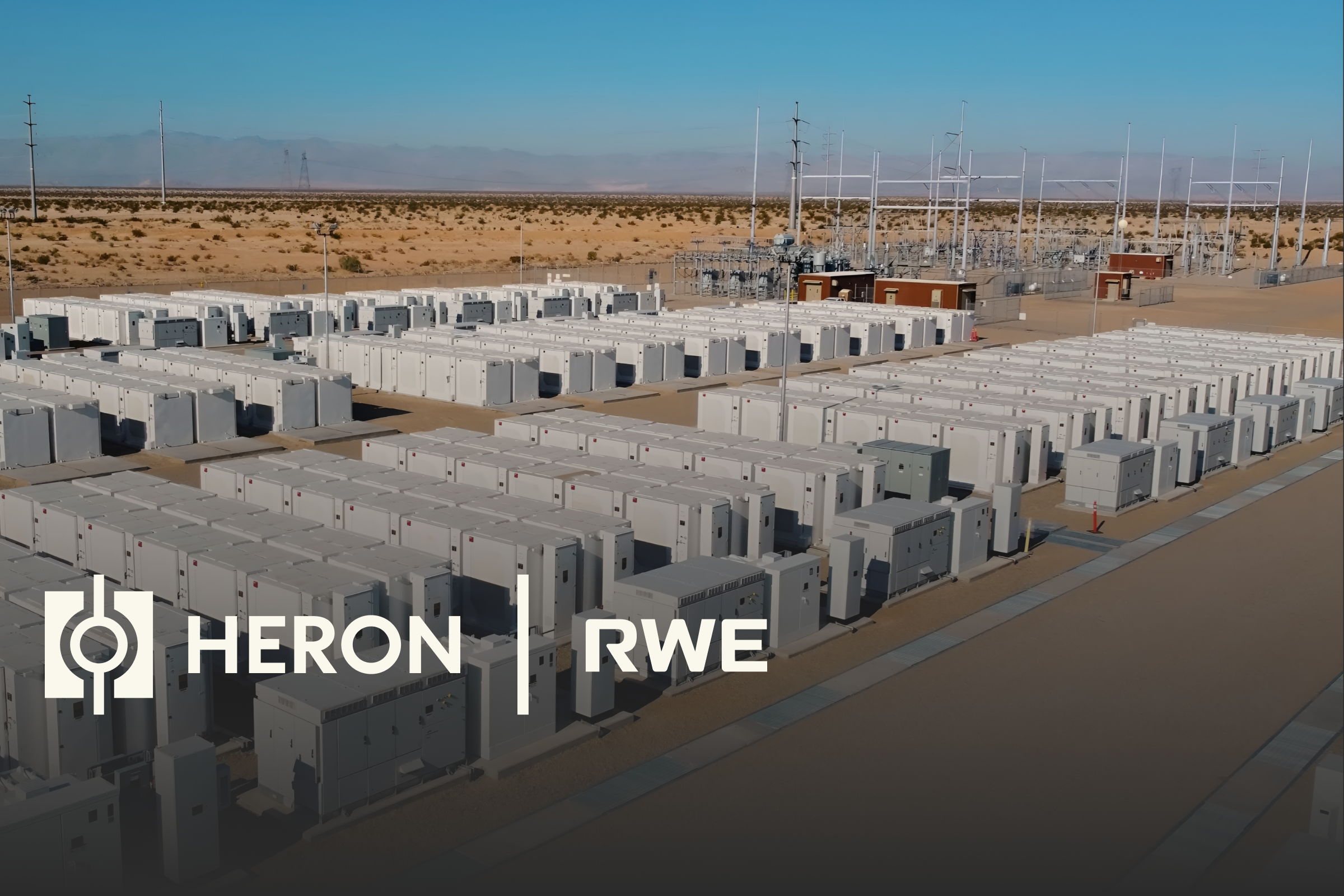
Heron Power and RWE Sign Pilot Agreement, Outline Path to Multi-Year Capacity Reservation

Bringing American-Made Solid-State Transformers to Utility-Scale Battery Storage
Heron Power and RWE Sign Pilot Agreement, Outline Path to Multi-Year Capacity Reservation
Bringing American-Made Solid-State Transformers to Utility-Scale Battery Storage

Heron Power Secures $60 Million Credit Facility and Adds Ex-Tesla CFO Zach Kirkhorn to Its Board
Heron Power, an American advanced power electronics manufacturer, today announced a $60 million credit facility provided by J.P. Morgan and TriplePoint Capital, and the appointment of Zach Kirkhorn, former Chief Financial Officer of Tesla, to its board of directors.
Heron Power Secures $60 Million Credit Facility and Adds Ex-Tesla CFO Zach Kirkhorn to Its Board
Heron Power, an American advanced power electronics manufacturer, today announced a $60 million credit facility provided by J.P. Morgan and TriplePoint Capital, and the appointment of Zach Kirkhorn, former Chief Financial Officer of Tesla, to its board of directors.
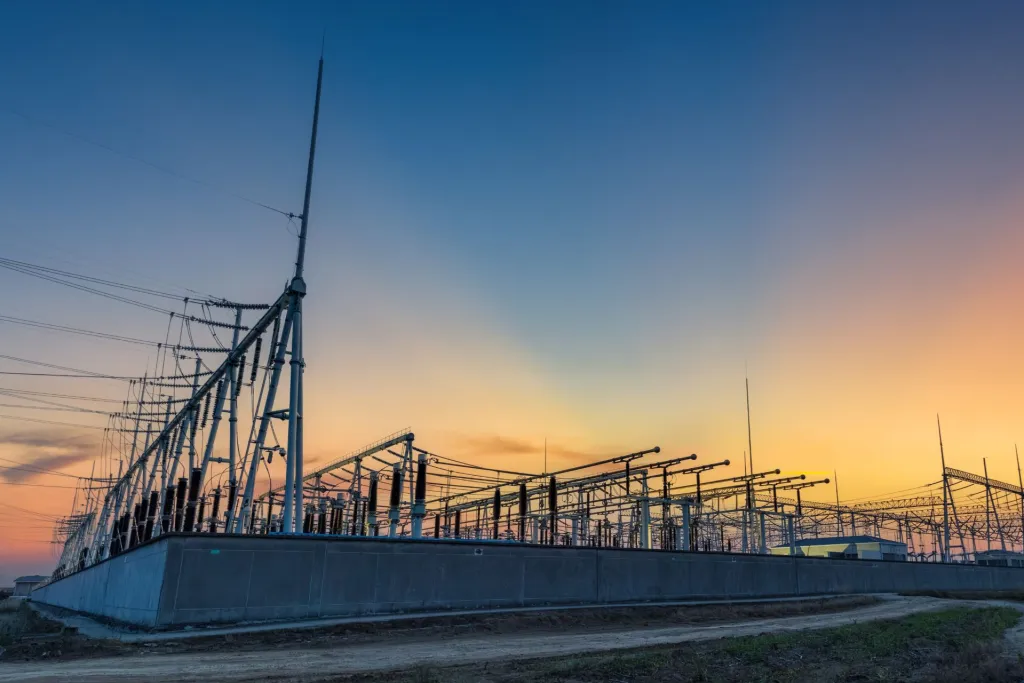
Latitude Media: How Heron Power plans to scale first transformer factory to 40 GW
CEO Drew Baglino on the company’s plans to ramp production in the coming years — and combat the U.S. power equipment shortage.
Latitude Media: How Heron Power plans to scale first transformer factory to 40 GW
CEO Drew Baglino on the company’s plans to ramp production in the coming years — and combat the U.S. power equipment shortage.